Gutter System Installation Tennessee: Reliable Drainage Solutions
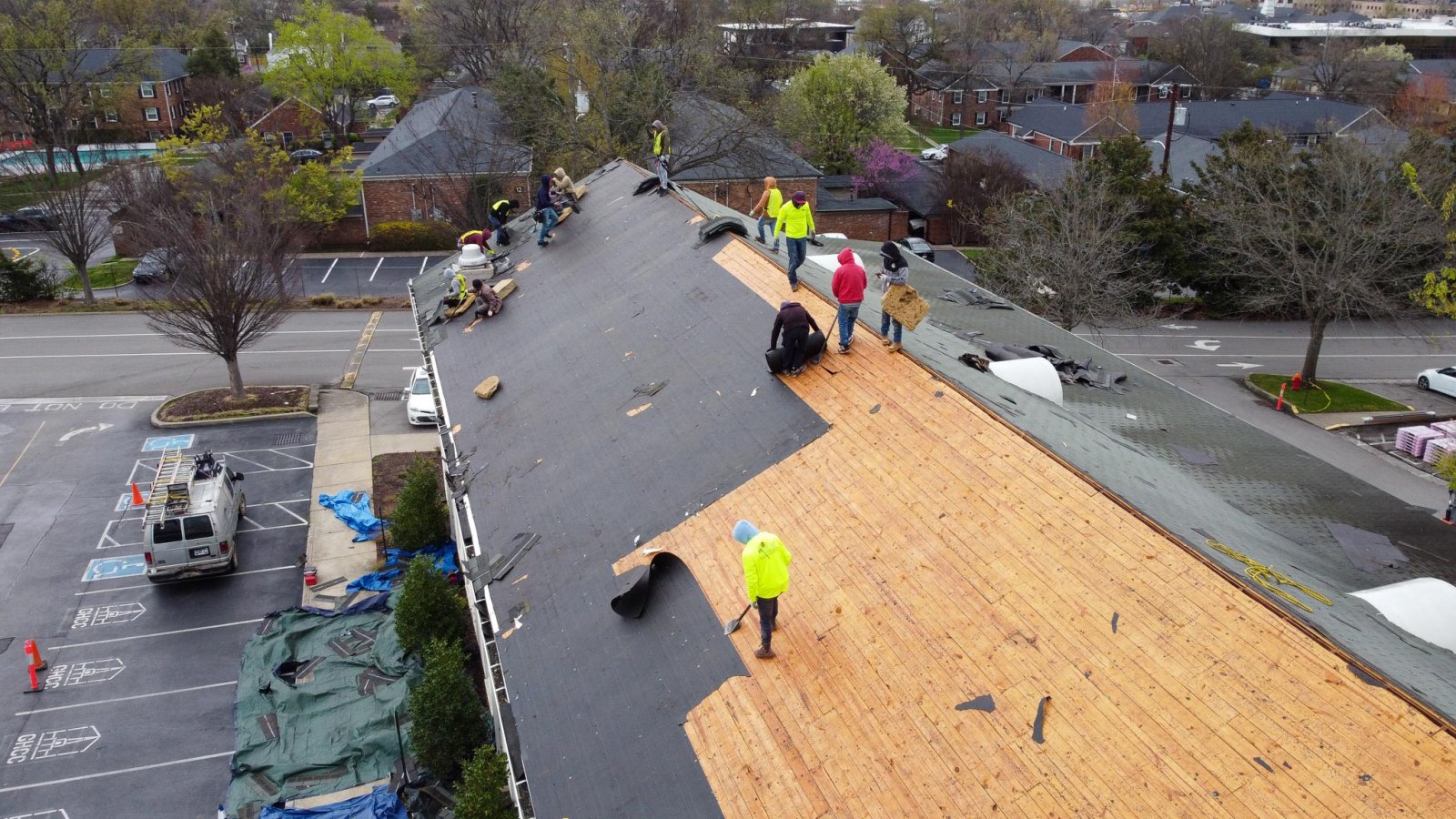
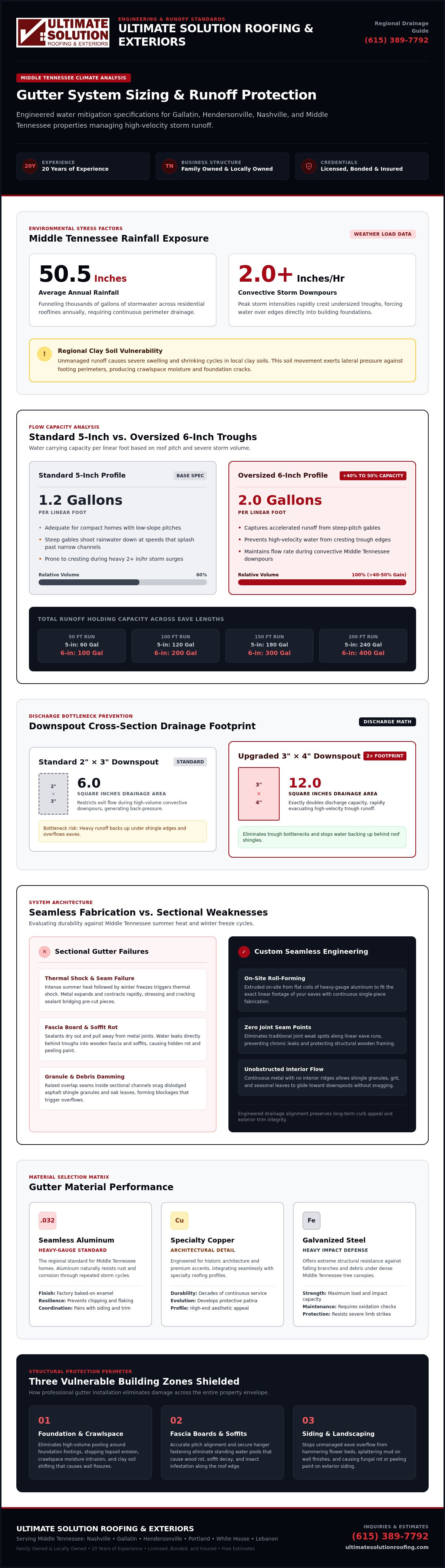
Middle Tennessee averages 50.5 inches of rainfall every year, funneling thousands of gallons of stormwater across your rooflines during severe seasonal storms. Without engineered drainage, that massive volume quickly threatens your foundation, crawlspace, and exterior walls. Investing in a professional gutter system installation Tennessee homeowners can depend on provides the first line of defense against severe moisture intrusion.
You already know how stressful it is to watch overflowing troughs drench your siding, erode landscaping, or pool around your foundation footing. When gutters pull loose, clog under heavy tree canopies, or lack the proper slope, stagnant water quickly rots fascia boards and invites pests. You shouldn't have to worry every time a storm rolls across the region.
Discover how custom seamless gutter solutions preserve your roofline and direct roof runoff safely away from your home. Ultimate Solution Roofing & Exteriors explains the drainage standards, downspout sizing factors, and key installation practices that protect your property through every downpour.
Key Takeaways
- A properly engineered gutter system installation Tennessee homeowners rely on directs heavy roof runoff away from vulnerable building perimeters.
- Sizing your gutters and downspouts according to roof pitch and storm volume prevents hazardous water backup beneath shingles.
- Accurate pitch alignment and secure hanger fastening eliminate standing water pools that cause fascia board rot and attract pests.
- Managing water runoff prevents the severe swelling and shrinking of local clay soils that leads to foundation cracks.
- Coordinating gutter solutions directly with your roof and siding preserves long-term structural integrity and exterior curb appeal.
Gutter System Installation Tennessee: Essential Defense Against Heavy Rainfall
Severe convective thunderstorms frequently sweep across Middle Tennessee, dumping over two inches of rain per hour. In communities like Gallatin, Hendersonville, and Nashville, these intense downpours quickly overwhelm neglected or poorly designed drainage systems. A high-capacity, custom gutter system installation Tennessee properties require captures thousands of gallons of roof runoff and channels it safely past your foundation perimeter.
Without engineered runoff management, that volume spills over the trough edges. Water hammers the landscape below, erodes topsoil, and pools against basement walls or crawlspace vents. A dependable system coordinates with your residential roofing and exterior finishes, preserving your siding and trim from fungal rot, mildew, and costly water damage.
The Critical Function of Seamless Gutter Systems
Unlike store-bought sectional pieces, seamless channels are roll-formed on-site from flat coils of heavy-gauge aluminum to fit the exact linear footage of your eaves. Continuous metal fabrication eliminates traditional joint weak spots, preventing seam failure and minimizing chronic leaks along the roofline. With no interior ridges, roof debris, grit, and leaves glide toward downspouts without snagging. This tailored profile delivers clean, modern lines that enhance the curb appeal of any home.
Why Sectional Gutters Fail in Middle Tennessee Climates
Sectional systems struggle against our regional weather extremes. Intense summer heat followed by winter freezes triggers thermal shock, causing aluminum sections to expand and contract rapidly. This movement stresses and cracks the sealant bridging each pre-cut piece.
- Seam failure: Sealants dry out and pull away from metal joints, allowing water to drip directly onto the wooden fascia boards behind them.
- Rotting fascia and siding: Water leaking behind the trough penetrates soffits, leading to hidden rot and peeling paint on your siding.
- Granule and leaf blockages: The raised overlap seams inside sectional gutters trap dislodged asphalt shingle granules and oak debris, creating recurring blockages that cause heavy spillover during storms.
Investing in reliable gutter solutions from Ultimate Solution Roofing & Exteriors protects your exterior trim, eliminates seasonal joint leaks, and safeguards your structural framing for decades to come.
Choosing the Right Gutter Size and Materials for Your Property
Every roof sheds water differently. Sizing your drainage depends on roof surface area, pitch, and the intensity of regional storms. Standard profiles can fail if a steep roof pitch accelerates runoff too rapidly. Precision planning during a gutter system installation Tennessee project keeps high-velocity water from cresting trough edges and washing down siding.
Standard 5-Inch vs. Oversized 6-Inch Gutter Capacities
Standard five-inch troughs function adequately for compact homes with low-slope pitches. However, steeper gables shoot rainwater down at rapid speeds, easily splashing past narrow channels. A six-inch K-style gutter holds roughly 2.0 gallons per linear foot compared to 1.2 gallons for a five-inch profile. That provides an immediate 40% to 50% increase in water carrying capacity.
Pairing these troughs with larger downspouts is equally critical. Standard two-by-three-inch downspouts offer six square inches of drainage area. Upgrading to three-by-four-inch downspouts doubles that footprint to 12 square inches, eliminating bottlenecks where heavy runoff backs up under shingle edges.
Material Selection: Seamless Aluminum and Heavy-Duty Metals
Material durability dictates how long your drainage system withstands regional storm cycles and falling branch impacts:
- Seamless .032-gauge aluminum: Aluminum remains the regional standard because it resists rust. Baked-on enamel finishes prevent chipping and coordinate with your existing trim and siding.
- Specialty copper: For historic architecture or premium accents, specialty roofing details pair naturally with copper troughs, which develop an attractive patina over decades of service.
- Galvanized steel: Steel offers extreme impact resistance against large limbs and heavy debris, though it requires routine inspections to protect against oxidation.
Adding Protective Gutter Guards for Debris Management
Heavy tree canopies in towns like Hendersonville and Lebanon shed pine needles and oak tassels that quickly plug downspout outlets. Quality micro-mesh guards shield open channels while accepting heavy surface water. They keep runoff moving freely, eliminate the hazard of frequent ladder cleaning, and stop standing water from attracting pests.
If you suspect your current gutters struggle to handle seasonal downpours, reach out to our team for an honest assessment of your home's exterior drainage needs.
The Step-by-Step Installation Process for Maximum Water Flow
Flawless drainage performance relies entirely on structural accuracy. Hanging brand-new metal channels against rotted wood or miscalculating the run angle creates pooling water, overflow, and premature leaks. A meticulous gutter system installation Tennessee properties need follows an exact mechanical sequence that protects your roof decking and building envelope.
Fascia Board Inspection and Surface Preparation
Technicians remove old hardware and evaluate the underlying lumber. Mounting new gutters against weakened wood causes fasteners to pull free under heavy water loads. When damp or rotting boards are discovered, carpenters complete a fascia roof repair before proceeding. A professional inspection confirms that the drip edge flashing extends at least 1/4 inch below the roof sheathing, guiding runoff squarely into the trough rather than letting it wick behind the fascia.
On-Site Custom Fabrication and Precision Slope Calibration
Trailers equipped with mobile roll-forming equipment shape continuous runs of seamless aluminum directly on your driveway. Installers fabricate channels to the exact fractions of an inch required by your roofline, ensuring clean end caps and seamless corners.
Installers then map a uniform downward slope toward each drainage outlet:
- Slope ratio: Troughs require a minimum drop of 1/4 inch for every 10 linear feet of run to keep water moving continuously.
- Aesthetic balance: Expert slope calibration ensures high-velocity water movement while keeping gutter lines visually parallel to your siding and soffit profiles.
- Puddle prevention: Accurate pitch prevents standing water, eliminating mosquito breeding zones and wet sludge accumulation.
Secure Fastening and Strategic Downspout Positioning
To resist heavy winter ice and sustained wind uplift, installers secure internal hidden hangers directly through the fascia and deep into solid rafter tails. Placing these hangers at spacing intervals of 24 to 32 inches provides rigid support across the entire roof run.
Downspout drop outlets are cut cleanly into the trough bottoms and sealed with industrial-grade exterior moisture sealants. Installers anchor vertical downspouts against exterior wall siding using durable straps, positioning long elbow extensions at the base. These extensions discharge rainwater at least 6 to 10 feet away from crawlspace entries, preventing soil washouts and preserving your foundation.
Preventing Foundation Erosion and Exterior Structural Damage
When roof drainage fails, the perimeter around your home absorbs the punishment. Tennessee residential building provisions require drainage channels to route roof runoff away from foundation footings to an approved location. Without an engineered gutter system installation Tennessee properties can trust during sustained storms, water drops straight from eaves onto the soil below, triggering costly structural shifts.
Managing Water Runoff in Middle Tennessee Clay Soils
Middle Tennessee is known for dense, expansive clay soils that absorb surface water very slowly. During prolonged wet spells across White House, Portland, or Murfreesboro, unchecked roof water quickly pools along basement walls and crawlspace perimeters. This saturated clay expands with immense force, applying hydrostatic pressure against foundation walls. When dry summer weather arrives, the soil shrinks, causing uneven settling, shifting, and cracked concrete footings.
Strategic downspout extensions safeguard your foundation by transporting high-volume runoff past this vulnerable perimeter zone:
- Soil stabilization: Moving discharge 6 to 10 feet away stops soil erosion around concrete slabs and footing walls.
- Crawlspace protection: Keeping runoff away prevents high ambient humidity, subterranean wood rot, and mold growth beneath your floors.
- Pest mitigation: Eliminating standing water pools deprives termites and subterranean insects of the damp environments they need to infest framing.
Protecting Siding, Soffits, and Roof Fascia from Moisture
Cascading water rarely drops cleanly to the ground. Wind-driven storm runoff regularly blows back against exterior walls. Overflowing troughs cause dirty splashback that stains lower wall cladding, degrades paint, and rots wood sheathing. If water wicks upward behind trim, it rots structural rafter ends and soaks attic insulation.
Coordinating your roofline channels with high-performance exterior cladding keeps moisture completely outside your living space. You can explore complete exterior solutions including siding installation Middle Tennessee to ensure your entire building envelope stays protected against regional storms.
Why Choose Ultimate Solution Roofing & Exteriors for Gutter Solutions
Selecting the right contractor to handle your drainage infrastructure protects the long-term investment you have made in your property. Ultimate Solution Roofing & Exteriors approaches runoff management not as an isolated task, but as an essential element of your building envelope. A dependable gutter system installation Tennessee properties benefit from requires precise craftsmanship and accountability from licensed, bonded, and insured professionals.
Two Decades of Local Exterior Expertise
As a family owned, locally owned exterior contractor with 20 years of experience, we bring practical field knowledge to every project. Our team provides services throughout Nashville, Gallatin, Hendersonville, Portland, White House, and Lebanon. Because we live and work here, we understand how Middle Tennessee storm seasons affect local architecture. We design drainage systems engineered specifically to handle sudden cloudbursts, heavy debris loads, and regional climate swings.
Unified Roofing, Siding, and Gutter Workmanship
Hiring separate subcontractors often leads to finger-pointing when water leaks develop between the drip edge, fascia, and wall panels. We eliminate that frustration by providing unified exterior care.
Our specialized gutter solutions are installed to coordinate directly with your existing residential roofing and wall cladding. Whether you need a standard upgrade or want to examine regional benchmarks outlined by siding and roofing contractors Tennessee property owners reference, our team makes sure every component works together smoothly to keep moisture away from your home.
Schedule Your Professional Inspection and Free Estimate
Protecting your home begins with an accurate assessment of its exterior drainage condition. We take the time to evaluate your roof pitch, measure eave spans, and examine underlying fascia boards before recommending specific solutions. We provide clear explanations, honest guidance, and free estimates without high-pressure sales tactics.
Call (615) 389-7792 today to speak with our team and schedule your professional inspection. Let us help you safeguard your foundation with a custom gutter system installation Tennessee homeowners can trust through every season.
Upgrade Your Exterior Drainage for Long-Term Protection
Managing heavy rainwater with properly sized, seamless troughs stops severe soil expansion and preserves your structural fascia boards. Eliminating joint leaks through custom roll-forming ensures roof runoff travels directly to oversized downspouts rather than spilling down exterior siding. When you invest in a quality gutter system installation Tennessee weather won't compromise your foundation or siding.
Ultimate Solution Roofing & Exteriors brings 20 years of experience as a family owned, locally owned exterior team serving Middle Tennessee communities. As a licensed, bonded, and insured contractor, our team provides free estimates and honest recommendations tailored to your specific roof pitch and yard grading. We focus on durable craftsmanship that safeguards your investment against unpredictable regional weather.
Take the first step toward safeguarding your exterior. We look forward to helping you protect your property with dependable drainage solutions built to last.
Frequently Asked Questions
How do I know if my home needs a 5-inch or 6-inch gutter system?
Your roof pitch, surface dimensions, and tree coverage determine the right size. Steep roofs shedding heavy rainwater need six-inch channels to prevent overflow during Middle Tennessee storms. Smaller, low-slope roofs often function well with standard five-inch troughs. During an evaluation, Ultimate Solution Roofing & Exteriors calculates your roof area to ensure your gutter system installation Tennessee project handles peak rainfall rates without spilling over.
What are the advantages of seamless gutters over sectional varieties?
Seamless troughs are custom roll-formed on-site from single pieces of metal to match your roofline dimensions. Because they lack intermediate seams, they eliminate joint failure caused by seasonal temperature swings across Greater Nashville. Their smooth interior also prevents debris snags, helping storm runoff move quickly toward downspouts without overflowing behind fascia trim or peeling your home siding paint.
Can new gutters be installed if my fascia boards have wood rot?
No, you shouldn't mount new gutters over rotting fascia boards. Fasteners will not bite securely into decayed wood, causing the entire channel to pull free when filled with water or winter ice. Our technicians inspect all wood framing along the eaves before mounting new metal. When damaged or damp boards are discovered, we complete the necessary repairs first to create a solid, secure structural foundation for your new installation.
How does professional gutter installation protect my home foundation?
A professional installation routes roof runoff safely away from Middle Tennessee clay soils before it pools around structural footings. Unmanaged runoff saturates the dense clay around your home, triggering expansive soil pressure that cracks slabs and basement walls. A proper gutter system installation Tennessee properties need channels rainwater into oversized downspouts with discharge extensions placed several feet out, keeping crawlspaces dry throughout wet weather.
Do I need gutter guards installed on my new gutter system?
Gutter guards are highly recommended if your property sits beneath mature trees or dense foliage. Homes in heavily wooded neighborhoods across Hendersonville and Brentwood benefit significantly from micro-mesh guards. Guards block pine needles, oak tassels, and leaves while still allowing high-volume rain to enter the trough. Adding protection keeps downspouts flowing freely, eliminates recurring debris jams, and significantly reduces the maintenance demands on your drainage system.
How often should gutter systems be inspected in Middle Tennessee?
You should schedule a professional inspection for your gutter system at least twice a year. Having your gutters evaluated in late spring after pollen drops and again in late autumn after heavy foliage falls is ideal. Periodic checks allow technicians to verify pitch alignment, confirm hanger security, and ensure downspout outlets remain unobstructed. Regular assessments ensure minor joint or flashing issues are caught before severe storms cause damage.
Will installing new gutters affect my existing roof warranty?
Proper gutter installation does not void your existing roof warranty when mounted correctly beneath the drip edge flashing. Warranties remain protected as long as the shingles and underlayment remain undisturbed. Our team fastens hangers into rafter tails beneath the eave, tucking gutter edges under existing metal drip edge flashing in compliance with building codes. This careful technique preserves the roofing system warranty while ensuring rainwater sheds cleanly.

Article by
Harry Stanley III
Harry Stanley III is a construction marketing strategist and fractional CMO at H&A Marketing. He has helped construction companies grow through website strategy, SEO, paid advertising, branding, lead generation, CRM systems, and professional content. His past work includes helping Meraki Solar generate an additional $3.7 million in revenue in his first year and supporting American Builders as a fractional CMO. Today, Harry works directly with custom home builders and construction companies to build marketing systems designed to generate qualified leads and measurable growth. https://harryandally.com