Gutter Replacement Tennessee: Homeowner Guide for 2026
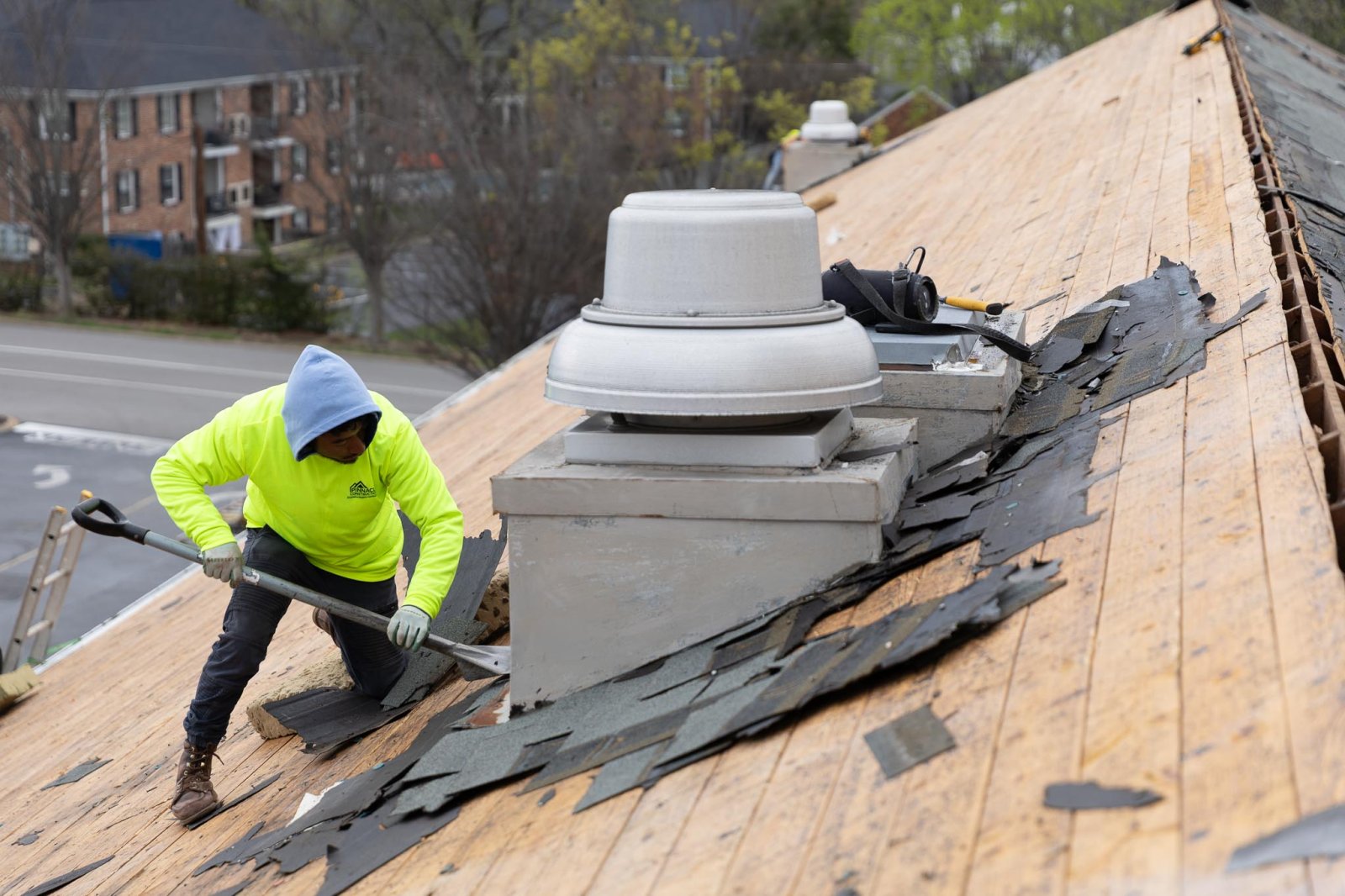
Nashville averages 47 inches of rainfall each year, and intense spring downpours can quickly overwhelm an outdated exterior drainage system. When water constantly cascades over your gutters and pools around your foundation, planning a dependable gutter replacement Tennessee homeowners can count on becomes a pressing priority. You probably already suspect that reapplying sealant to aging sectional joints won't stop the hidden moisture damage eating away at your fascia boards.
At Ultimate Solution Roofing & Exteriors, our team knows that choosing between patching a localized leak and installing a new system depends on gutter age, physical slope, and Middle Tennessee storm volume. In this guide, you'll learn how to identify clear indicators of system failure before structural damage starts, select durable seamless profiles built for heavy rainfall, and prepare your property for the installation process. Here is everything you need to evaluate your drainage needs and safeguard your home against severe seasonal weather.
Key Takeaways
- Discover why a timely gutter replacement Tennessee homeowners plan for stops heavy rainwater runoff from eroding sensitive Middle Tennessee clay soil and foundations.
- Spot subtle early warnings of drainage failure, from sagging fasteners and metal fatigue to peeling exterior paint along your roofline.
- Learn how system age, recurrent seam leaks, and storm damage determine whether targeted repairs or a full upgrade makes the best practical sense.
- Compare gutter materials to see why continuous seamless aluminum channels offer superior protection during regional downpours.
- Understand the complete installation process, including crucial fascia board assessments and property preparation steps before the crew arrives.
Why Gutter Replacement Tennessee Homeowners Need Protects the Whole Exterior
A complete gutter replacement involves removing damaged, improperly sloped, or undersized troughs and upgrading to continuous water management channels designed for maximum flow. A standard rain gutter collects the water shedding across your roof plane and channels it toward designated downspouts. When these components pull away or clog, rainwater spills directly along the roof overhang and saturates the vulnerable fascia boards behind them. Gutter solutions are essential exterior moisture protection systems engineered to capture and redirect roof water before it compromises the structural integrity of your building envelope.
In Middle Tennessee communities like Gallatin and Hendersonville, heavy downpours test an exterior drainage system quickly. Saturated grounds create hydrostatic pressure that cracks walls and damages crawl spaces. Investing in a professional gutter replacement Tennessee homeowners trust ensures that thousands of gallons of storm runoff are carried safely away from vulnerable structural elements rather than dumping straight into the surrounding grade.
Safeguarding Your Foundation and Landscaping
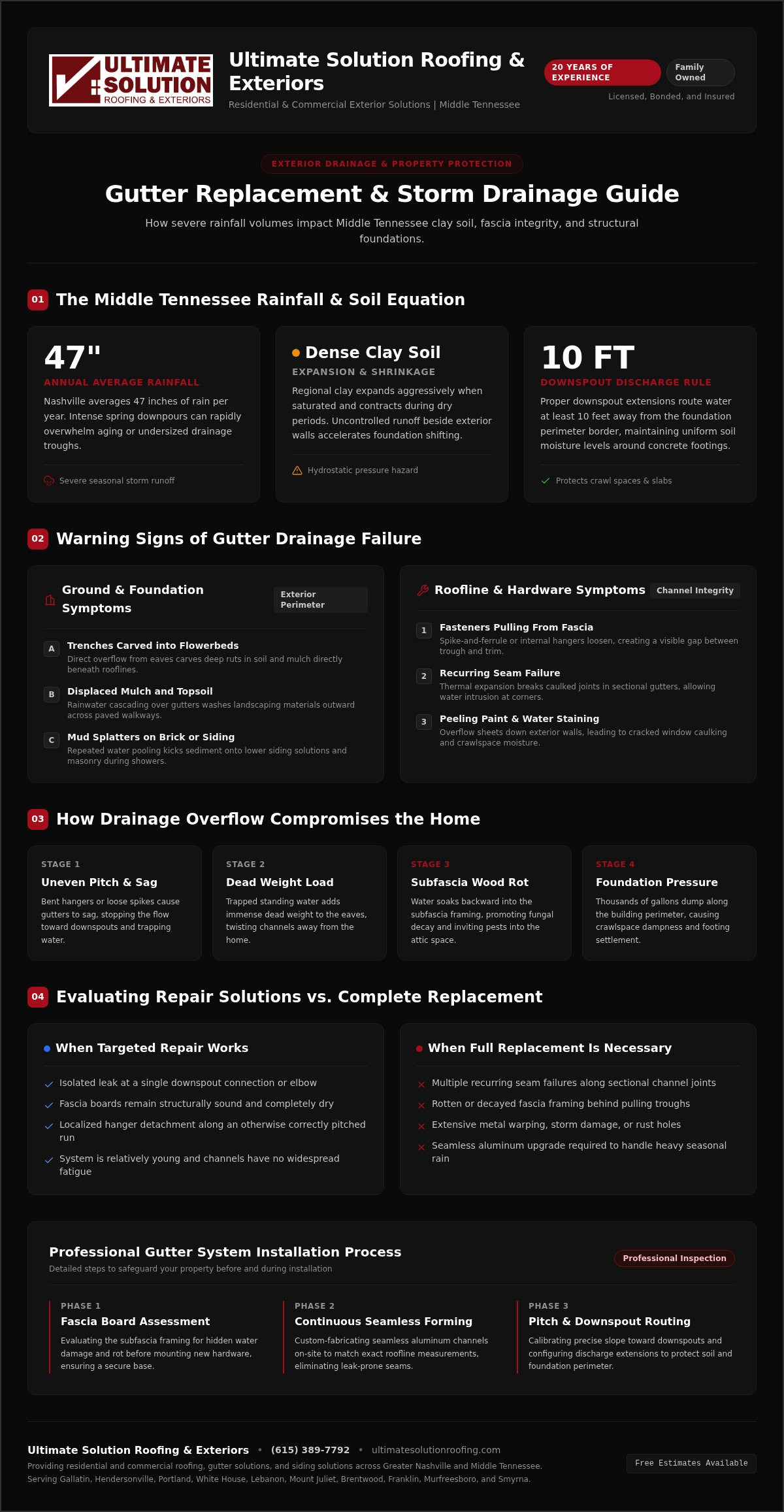
Middle Tennessee is known for dense clay soil that expands dramatically when wet and shrinks during dry spells. Uncontrolled roof runoff dumping beside exterior walls accelerates this expansion, leading to shifting foundation walls and damp crawl spaces. Watch for these clear warning signs on your grounds:
- Trenches carved into flowerbeds directly underneath roof eaves
- Displaced mulch and topsoil washed out across paved walkways
- Mud splashed onto brick or siding after moderate rainstorms
Installing proper downspout extensions routes water at least ten feet away from the foundation perimeter border. This measure keeps moisture levels uniform around the concrete footing and prevents structural settling.
Preventing Fascia Board Rot and Roof Edge Damage
When channels pull loose, backed-up water soaks into the wooden subfascia framing your eaves. This trapped moisture encourages fungal decay and invites pests into the attic space. Gallons of heavy standing water add immense dead weight to the roofline, loosening fasteners and causing the trough to twist away from the home.
Modern exterior water management also protects wall cavities. When paired with high-quality siding solutions, properly sized eaves and downspouts form a continuous barrier against wind-driven rain, shielding wall sheathing and insulation from hidden moisture intrusion.
Warning Signs That Signal It Is Time for New Gutters
Catching drainage issues early prevents costly exterior repairs down the road. Severe weather across Middle Tennessee places high physical stress on drainage troughs. Strong straight-line winds, heavy hail, and dense debris can bend metal channels and loosen mounting brackets. Recognizing these physical deformities helps you decide when a complete gutter replacement Tennessee properties need is more practical than continuing to patch failing hardware.
Visible Sagging, Pulling Away, and Uneven Pitch
A properly installed system maintains a precise pitch toward the downspouts to keep water moving continuously. When internal hangers bend or old spike-and-ferrule fasteners pull out from the fascia board, sections begin to sag. Look along your roofline from the ground. If you notice a visible gap between the metal trough and the wood trim, the fasteners have lost their grip. Trapped standing water in these sunken areas creates heavy stress points and attracts breeding mosquitoes throughout warm Tennessee summers.
Cracks, Rust Spots, and Seam Failures
Traditional sectional gutters rely on caulked joints that break down from expansion and contraction. Over years of seasonal temperature swings, this stress triggers seam failure at connecting corners and mid-run joints. Once water leaks behind a seam, rust spreads across galvanized metal, causing small holes and stress cracks. If you notice water cascading onto sidewalks or standing in puddles beneath straight gutter runs during an ordinary shower, the channels have lost their integrity.
Interior and Exterior Moisture Indicators
Water intrusion rarely stays confined to the exterior eaves. Overflowing troughs cause water to sheet down siding, resulting in peeling exterior paint, water marks, and cracked caulking around window frames. Over time, that water travels lower, collecting in crawlspaces and showing up as damp odors or foundation staining.
If your troughs overflow regularly or show obvious storm impact, schedule a professional inspection with Ultimate Solution Roofing & Exteriors. Our team can document structural wear, identify hidden wood rot, and help you determine whether your drainage system is ready for an upgrade.
The Gutter Repair vs. Replacement Decision for Middle Tennessee Properties
Deciding between patching an existing drainage setup and scheduling a full upgrade comes down to several practical variables. System age, the physical extent of the damage, current material condition, and past leak history all dictate the right path forward. Applying sealant repeatedly to deteriorating channels often wastes time and money while hidden rot continues unchecked. Evaluating these criteria objectively helps property owners determine when a full gutter replacement Tennessee contractors provide makes the most sense.
| Factor | Repair Candidate | Replacement Candidate |
|---|---|---|
| System Age | Under 10 to 15 years old | 20 years or older |
| Leak Extent | Isolated joint or single corner | Multiple continuous seams and pinholes |
| Structural Fascia | Firm, solid wood backing | Soft spots, rot, or mold growth |
| Storm Impact | One bent elbow or bracket | Crushed runs from heavy hail or tree limbs |
When a Targeted Repair Is Sufficient
If the metal remains straight and structurally sound, targeted work can quickly resolve isolated issues. Re-securing a single loose bracket restores the proper channel pitch so water drains freely toward the outlet. Resealing a single corner joint with fresh exterior sealant stops minor drips effectively. When a falling branch damages just one downspout, exploring localized repair solutions preserves the rest of the operational system without unnecessary expense.
When Full Replacement Becomes the Practical Path
Older sectional troughs reaching two decades of service rarely justify continuous patching. Constant thermal expansion and contraction weaken the entire line, causing repairs at one joint to trigger failures down the run. When severe storms drop heavy branches or leave extensive hail dents that warp channel geometry, water flow becomes permanently restricted.
Pervasive wood rot along the fascia also demands complete removal. New hardware cannot anchor into decaying lumber. Stripping the old gutters allows your contractor to replace damaged backer boards, ensuring the new continuous system attaches to solid structural framing that holds firm during intense regional storms.
Key Gutter Materials and Profiles for Regional Weather
Selecting the right materials for a gutter replacement Tennessee project requires balancing weather durability, water carrying capacity, and maintenance expectations. With over 70% of homes nationwide relying on aluminum, this metal remains the regional standard across Greater Nashville. While high-end architectural properties in communities like Brentwood or Franklin sometimes select copper for its century-long lifespan and natural patina, aluminum delivers reliable performance against regional weather extremes.
Seamless Aluminum vs. Traditional Sectional Gutters
Traditional sectional gutters rely on factory-cut ten-foot segments joined by plastic or caulked metal connectors. Each joint represents an eventual point of seam failure when summer heat and winter freezes expand and contract the metal. In contrast, seamless systems are fabricated on-site using a specialized roll-forming machine that extrudes a continuous trough to the exact length of each roof plane. Removing mid-run seams delivers several key benefits:
- Eliminates leak-prone joints along straight exterior runs
- Prevents debris from catching on internal connector ridges
- Resists rust and stays corrosion-free under persistent moisture
- Provides a sleek, tailored profile that blends cleanly with the eaves
Sizing Channels and Downspouts for Heavy Downpours
Standard five-inch troughs work well for shallow-pitch roofs and modest exterior profiles. However, steep roofs shed rainwater at high velocity during intense storms, easily overtopping small channels. Upgrading to a six-inch profile increases trough water capacity by roughly 40%, preventing spillover during sudden cloudbursts.
Downspout sizing must match that channel volume. Standard two-by-three inch downspouts clog quickly with oak leaves or maple helicopters common across Sumner and Wilson counties. Expanding to three-by-four inch downspouts lets drainage systems evacuate water twice as fast, reducing backup risks and keeping channels light during heavy precipitation.
What to Expect During Professional Gutter System Installation
A successful gutter replacement Tennessee project follows an orderly, step-by-step workflow designed to protect your property and ensure long-term exterior durability. Coordinating channel replacement alongside regular residential roofing maintenance ensures every component at the eaves functions together to shed rainwater cleanly away from your siding and foundation.
System Removal and Fascia Board Inspection
The installation crew starts by carefully detaching old gutters and downspouts. Technicians work methodically so roof shingle overhangs and underlayment remain undisturbed. Once the old channels are down, the team inspects the subfascia for soft spots, fungal decay, or insect activity. Installers also check the metal drip edge along the roof decking. If water has been rolling behind old brackets, damaged boards must be replaced before installing new hardware so the new system anchors to solid wood.
Custom Fabrication and Secure Mounting
Installers extrude continuous aluminum troughs right in your driveway using a specialized mobile roll-forming trailer. Custom measurements ensure each channel fits its corresponding roof plane without mid-run joints. To mount the channels securely, crews fasten heavy-duty internal hangers directly through the fascia and into the structural rafter tails with exterior-grade screws. Using digital levels, installers calibrate a precise downward slope toward each drop outlet, preventing standing water and allowing gravity to move heavy storm volume efficiently.
Downspout Placement and Final Site Cleanup
Strategic downspout placement directs runoff away from foundation footings while respecting natural drainage patterns. Installers run water flow tests along every trough to confirm rapid drainage, checking corners and end caps for a watertight seal. Once testing wraps up, technicians clear away old materials and sweep magnetic tools across lawn areas to pick up loose fasteners.
Contact our team to schedule your free estimate today.
Protect Your Home With a High-Capacity Exterior Drainage System
Managing severe weather runoff starts with recognizing when aging, leaky troughs no longer protect your siding and foundation. Upgrading to continuous seamless aluminum channels eliminates vulnerable joint leaks, while moving to six-inch troughs ensures intense downpours drain quickly. Investing in a professional gutter replacement Tennessee homeowners rely on prevents costly wood rot along your roofline and protects your structural foundation year after year.
Ultimate Solution Roofing & Exteriors is a locally and family owned contractor with over 20 years of exterior experience. As a licensed, bonded, and insured team serving Nashville, Gallatin, and Franklin, we provide thorough property evaluations to inspect your subfascia, gutter slope, and downspout capacity. Call us at (615) 389-7792 to speak with an experienced specialist about your drainage needs.
Taking proactive steps today keeps rainwater moving safely away from your home, protecting your exterior through every sudden Middle Tennessee storm.
Frequently Asked Questions
How do I know if my gutters need replacement or just repair?
The choice between repair and replacement depends on system age, damage extent, and fascia condition. An isolated loose hanger or single leaking corner can be repaired quickly. However, if your system is approaching twenty years old, shows extensive metal fatigue, or sags along multiple runs, planning a full gutter replacement Tennessee homeowners trust is the more practical long-term investment.
Can damaged gutters cause roof leaks or foundation problems?
Yes, failing gutters directly cause both roof edge leaks and structural foundation damage. When channels back up or pull away, trapped water wicks upward into roof decking and subfascia, rotting wood trim and shingles. Below, overflowing water pools around foundation walls, causing the expansive clay soil common in Middle Tennessee to swell and exert pressure that can crack basement walls or flood crawlspaces.
What size gutters work best for Middle Tennessee homes?
Six-inch seamless gutters paired with three-by-four-inch downspouts work best for most Middle Tennessee homes. Nashville and surrounding communities experience sudden, intense rainstorms that easily overwhelm standard five-inch troughs. Upgrading to six-inch channels increases water holding capacity by roughly 40%, which accommodates the steep roof pitches and heavy storm volumes typical of properties in Gallatin, Hendersonville, and Franklin.
How long does a seamless gutter installation usually take?
A typical seamless gutter installation takes between one and two days to complete. The exact timeline depends on the linear footage, roof height, and whether damaged fascia boards need repairs after old channels are removed. Because our team extrudes seamless aluminum troughs on-site to exact roof dimensions, installation moves efficiently while ensuring each run is accurately pitched and securely fastened.
What is the difference between seamless and sectional gutters?
Sectional gutters consist of pre-cut segments joined together with sealants and connectors, while seamless gutters are extruded as single, continuous metal troughs. Sectional joints frequently experience seam failure from repeated expansion and contraction during seasonal weather swings. Seamless systems eliminate joints along straight runs, significantly reducing leak points and preventing debris from snagging inside the channel.
What happens if fascia boards behind the gutters are rotted?
Any rotted fascia boards must be replaced before hanging new troughs. Gutters cannot anchor securely into decaying wood, and heavy storm water will pull loose fasteners right out of the roofline. During a professional installation, technicians inspect the entire subfascia after removing old gutters, replacing deteriorated lumber to ensure your new gutter solutions mount to solid structural framing.
Can new gutters be installed during a roof replacement project?
Yes, coordinating a gutter replacement Tennessee homeowners schedule alongside a roof replacement is an ideal approach to complete exterior water protection. Pairing both projects lets crews inspect the decking, replace worn drip edge flashing, and mount new continuous troughs with the proper slope. This integrated process protects the entire roofline and ensures all drainage components work together effectively.

Article by
Harry Stanley III
Harry Stanley III is a construction marketing strategist and fractional CMO at H&A Marketing. He has helped construction companies grow through website strategy, SEO, paid advertising, branding, lead generation, CRM systems, and professional content. His past work includes helping Meraki Solar generate an additional $3.7 million in revenue in his first year and supporting American Builders as a fractional CMO. Today, Harry works directly with custom home builders and construction companies to build marketing systems designed to generate qualified leads and measurable growth. https://harryandally.com