RCV Depreciation Release Process for Roofing in Middle Tennessee
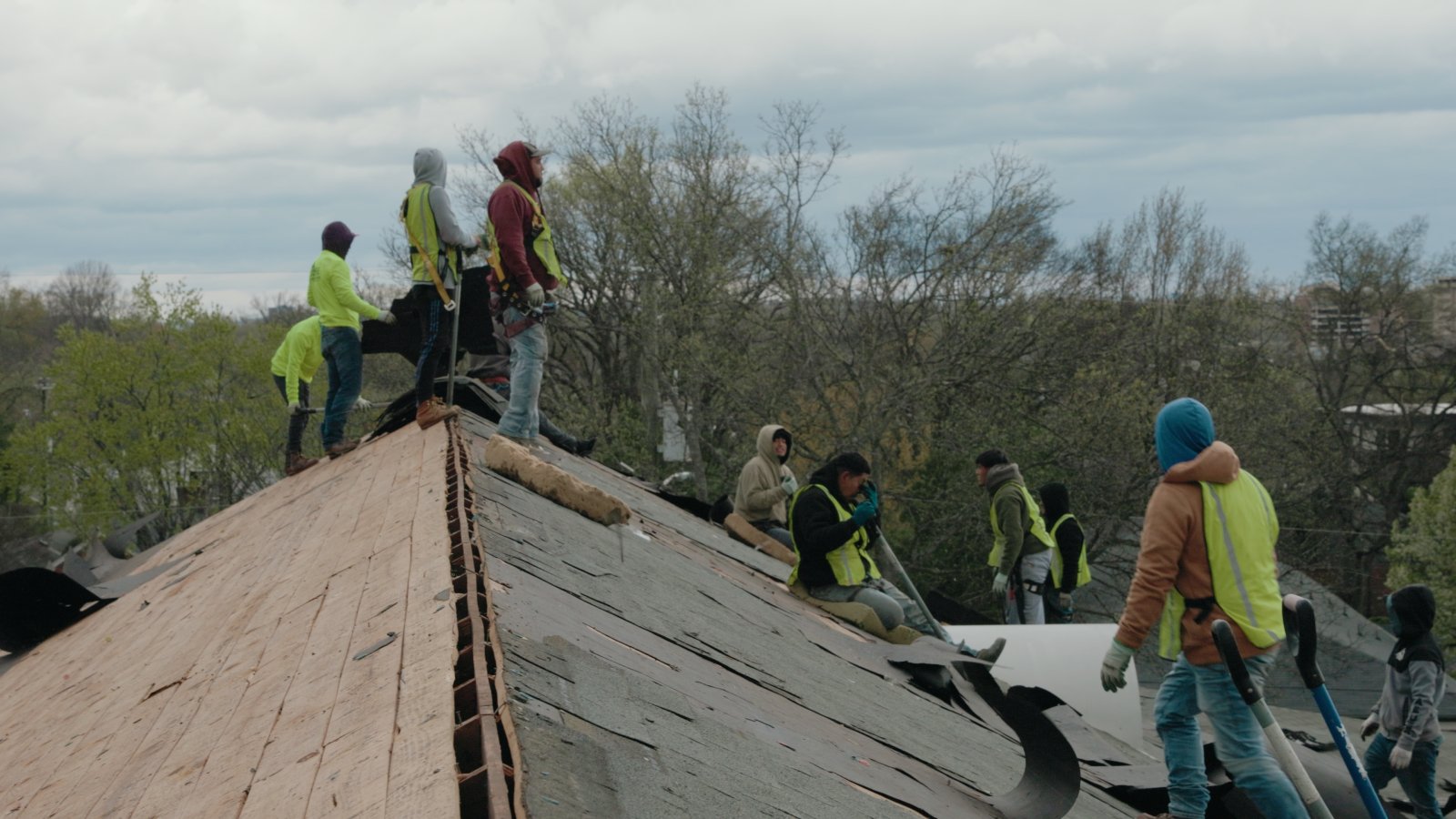
The final roof payment usually takes one more step after the work is complete. The RCV depreciation release process roofing Middle Tennessee homeowners may face is a documentation checkpoint, not an automatic deposit. If your insurer issued an initial payment based on Actual Cash Value (ACV), it may have withheld recoverable depreciation until you finish the covered work and submit the required proof.
It’s reasonable to wonder whether a contractor’s invoice is enough. Requirements vary by policy and carrier, so ask your insurer which records and forms it needs, how to submit them, and what deadline applies. A final invoice may be part of the request, but it may not be the only document required.
This guide explains the typical payment sequence, records to gather after roof repairs or replacement, and practical ways to follow up if the release is delayed. Ultimate Solution Roofing & Exteriors is a family-owned, locally owned company with 20 years of experience serving Middle Tennessee. Our team can inspect and document roof damage, provide photographs and estimates, and coordinate during restoration. We’ll also clarify where contractor documentation can help, while your insurer remains responsible for claim decisions and payment.
Key Takeaways
- Learn how RCV, ACV, and recoverable depreciation fit into a typical roof claim payment sequence.
- Use the RCV depreciation release process roofing Middle Tennessee homeowners may encounter to understand what to confirm with their insurer before submitting a request.
- See which records, such as completion documents or photographs, may help support a depreciation request, and why carrier requirements can differ.
- Follow up with your insurer to confirm receipt, check for missing documentation, and ask about the review status.
- Understand how a roofing professional can document damage and coordinate during restoration without determining claim approval or payment.
What the RCV Depreciation Release Process Means for a Middle Tennessee Roof Claim: RCV Depreciation Release Process Roofing Middle Tennessee
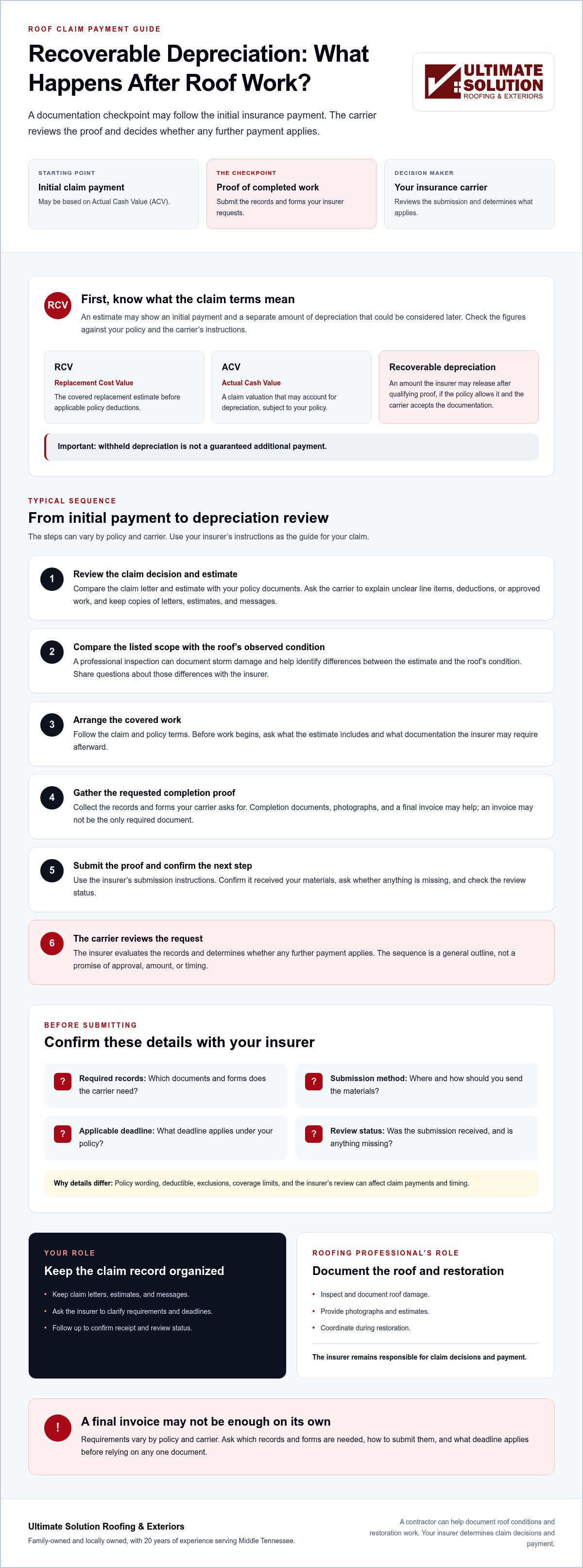
The release of recoverable depreciation depends on your policy, completed work, proof the insurer accepts, and the carrier’s review. A claim estimate may show an initial payment and a separate amount of depreciation that could be considered later. Your policy and insurer’s instructions determine how those amounts apply to your claim.
That distinction matters whether your home is in Nashville, Gallatin, Hendersonville, Portland, White House, or Lebanon. A carrier’s estimate can help explain its current assessment, but it doesn’t establish a universal process or promise a particular final payment. Check your policy and ask your insurer to explain any terms or requirements you’re unsure about.
RCV, ACV, and recoverable depreciation in plain English
Replacement Cost Value (RCV) is the covered replacement estimate before applicable policy deductions. Actual Cash Value (ACV) is a claim valuation that may account for depreciation, subject to your policy. Depreciation reflects factors such as age or wear in the insurer’s valuation. The Replacement Cost Value overview offers general background on how replacement value differs from actual cash value.
Recoverable depreciation is an amount the insurer may release after qualifying proof, if the policy allows it and the carrier accepts the documentation. For example, an estimate may list a replacement amount, an ACV payment, and depreciation withheld for possible later consideration. Review the carrier’s figures with your policy documents rather than assuming the labels mean the same thing in every claim.
Withheld depreciation is not a guaranteed additional payment.
Why the first insurance payment may not be the final payment
A claim may move through these general stages: the insurer makes an initial claim decision and explains its valuation; you arrange the covered work according to the claim and policy terms; you gather completion records and submit the requested proof; then the carrier reviews the submission and determines whether any further payment applies. This is a typical outline, not a promise that every insurer follows the same steps.
The amount and timing of claim payments can depend on the deductible, exclusions, coverage limits, policy wording, and the insurer’s review. The initial payment may also reflect only the carrier’s current assessment of covered damage. Before work begins, ask your insurer what the estimate includes, what documentation it may require afterward, and whether any deadlines apply under your policy.
If you’re reviewing your home’s roofing needs alongside a claim, see our information about residential roofing services. A contractor can document roof conditions and provide project records, while the insurer remains responsible for claim decisions and payment.
How the Roof Claim Moves from Initial Payment to Depreciation Review
The RCV depreciation release process roofing Middle Tennessee homeowners follow can involve several handoffs: you review the claim, a roofing professional documents the work, and your insurer evaluates the records. The steps below are typical, not a guarantee that every carrier uses the same process or reaches the same decision.
- Review the insurer’s decision and estimate. Compare the claim letter and estimate with your policy documents. If a line item, deduction, or part of the approved work is unclear, ask the carrier for an explanation in writing. Keep copies of claim letters, estimates, and messages.
- Compare the listed scope with the roof’s observed condition. A professional inspection can document storm damage and help identify differences between the estimate and the roof’s condition. Share questions about those differences with the insurer before changing the planned work.
- Discuss scope changes with the carrier. If the work may differ from the approved estimate, contact the insurer to ask how it wants the change documented and reviewed. A contractor can provide photographs and an estimate to explain observed conditions, but the insurer decides whether to revise its claim assessment.
- Complete the work and organize project records. The contractor may provide a final invoice, completion details, photographs, or other records. Ask what the insurer needs, since requested evidence can vary by policy and claim.
- Submit and track the depreciation request. Send the requested documents through the insurer’s stated process. Keep a dated copy and note how and when you submitted it. The insurer reviews the materials and decides whether any further payment is due under the policy.
Keep responsibilities clear after the initial decision
Your role is to review the policy and claim documents, communicate with the carrier, submit the requested records, and keep your file organized. Your roofing professional can inspect and document conditions and provide project records. The carrier reviews the claim and determines whether the policy supports another payment. Contractor documentation can help explain the work, but it doesn’t guarantee approval or payment.
If a submission appears incomplete or the review is unclear, ask the insurer to confirm receipt, identify any missing records, and explain the status. The Tennessee Department of Commerce and Insurance provides consumer resources and information about contacting the state insurance regulator. For roofing and insurance support, you can also review Ultimate Solution’s storm damage and insurance services.
In short, the usual stages are claim review, scope clarification, roof work, documentation submission, and insurer review, with exact requirements and decisions varying by policy and carrier.
Which Documents Can Support an RCV Depreciation Request?
There isn’t one document packet that fits every carrier. In the RCV depreciation release process roofing Middle Tennessee homeowners may encounter, the insurer’s instructions and policy determine what evidence it will review. Invoices, photographs, estimates, and completion records are useful examples, but ask your carrier to confirm its specific requirements before submitting anything.
A practical document checklist for homeowners
Keep claim documents together so you can compare the insurer’s approved scope with the work completed. The records below can help explain the project and support communication with the carrier.
| Possible record | How it may help | Who may provide it |
|---|---|---|
| Claim estimate and approved scope | Shows the insurer’s current assessment and the work it included. | Insurer |
| Claim letters and policy details | Help you check coverage terms, instructions, and any applicable submission deadline. | Insurer and homeowner |
| Photographs of damage or completed work | Provide visual context for documented conditions and completed repairs. | Roofing contractor or homeowner, if available |
| Contractor estimate | Describes proposed work and may help explain differences from the insurer’s scope. | Roofing contractor |
| Final invoice and completion details | Record the work performed and may support a request for depreciation review. | Roofing contractor |
| Submission confirmation and carrier response | Help track what you sent, when you sent it, and how the insurer responded. | Homeowner and insurer |
Ask your roofing contractor for relevant photographs, a detailed estimate, and completion records. Keep copies of what you submit and any response in one claim file. The insurer may request different evidence, so confirm the needed documents and submission method directly with the carrier. For more guidance, see our Tennessee roofing claim help.
When the final work differs from the original estimate
Sometimes a professional inspection or work in progress identifies damage or conditions that weren’t reflected in the initial estimate. Keep clear records of the difference and contact the insurer to ask what steps it requires before the work or scope changes. Don’t assume extra work, material changes, or upgrades qualify for insurance payment.
Make sure the invoice and completion records accurately describe the work performed and align with the approved scope where applicable. If the insurer’s estimate, the completed work, or its paperwork instructions don’t match, request written clarification. Clear, consistent records can make it easier for the carrier to understand what you’re asking it to review, though the insurer decides whether any additional payment is due.
How Middle Tennessee Homeowners Can Follow Up Without Assuming Approval
After you send a depreciation request, a clear follow-up can help identify whether the carrier received your records and what remains to be reviewed. Whether you live in Greater Nashville, Gallatin, Hendersonville, Portland, White House, or Lebanon, keep your questions focused and your claim notes in one place. Review timing and documentation requirements vary by insurer and policy, so ask your carrier rather than relying on a general timeline.
Questions to ask your insurance carrier
Use the claim contact or submission channel identified by your insurer. During a call or in a written message, ask:
- Did you receive my depreciation request and all attached documents?
- Is any information or record still missing?
- Which policy terms or conditions apply to the request?
- Does the policy state a deadline for completing the work or submitting proof?
- What is the current review status, and how should I provide any additional information?
Record the date, the representative’s name, and the instructions you receive. Keep that note with your claim correspondence and a copy of your submission. If the carrier gives you a deadline or requests a specific form, save that information and follow up if anything is unclear. This paper trail helps you track the RCV depreciation release process roofing Middle Tennessee homeowners may encounter without treating a request as an approval.
When the carrier requests more information or disagrees with the scope
If the insurer asks for more records, request a specific list of what it needs and how each item should be submitted. If it questions the work or scope, ask which estimate line or detail needs clarification and why. Then share relevant contractor records, inspection findings, or photographs through the carrier’s requested channel. A roofing professional can document roof conditions and provide an estimate, but the insurer makes claim decisions.
Don’t climb onto the roof to check damage or gather evidence. A professional inspection is the safer way to assess storm damage, active leaks, or structural concerns. If the review remains unclear, ask the carrier to explain its position in writing and identify any next steps available under your policy.
Ultimate Solution Roofing & Exteriors can inspect and document roof damage, provide photographs and estimates, and coordinate during restoration. Our team serves homeowners throughout Middle Tennessee. This support can help organize project information, but it cannot guarantee coverage, approval, or payment.
How Ultimate Solution Roofing & Exteriors Supports Roof Restoration in Middle Tennessee
Once you understand your responsibilities and have confirmed the insurer’s documentation requirements, a roofing professional can help organize the records tied to the work. Ultimate Solution Roofing & Exteriors serves homeowners throughout Middle Tennessee, including Nashville, Gallatin, Hendersonville, and Lebanon. Our team can inspect and document roof damage, provide photographs and estimates, and coordinate during restoration.
What a roofing contractor can document during restoration
A professional inspection can record observed roof conditions and help clarify how the proposed or completed work relates to the documented damage. Photographs, an estimate, and completion records can give you organized information to share with your carrier, especially if the estimate and work scope appear different. Ask your insurer how it wants those records submitted and whether it needs specific forms or details.
Clear documentation supports communication, but it doesn’t decide the claim. The insurance carrier, not the roofing contractor, determines coverage, approval, and whether any payment is due. For details about our Tennessee insurance claim guide and insurance support, see our insurance-solutions page. You can also learn about our residential roofing services in Middle Tennessee.
During the RCV depreciation release process roofing Middle Tennessee homeowners may need to coordinate records from several sources. Our team can provide project documentation and work with you during restoration, while you stay in contact with the carrier about policy terms, required evidence, and review status.
A clear next step for homeowners in Greater Nashville
Ultimate Solution is family-owned and locally owned, with 20 years of experience. Our team is licensed, bonded, and insured. If you’re concerned about storm damage, an active leak, or roof conditions that need professional attention, don’t climb onto the roof to investigate. A professional inspection can help document what’s visible and identify appropriate next steps.
If you’d like to discuss a roof inspection or request a free estimate, call Ultimate Solution Roofing & Exteriors at (615) 389-7792. We can explain how our team may assist with inspection and restoration records. Your insurer remains responsible for all claim decisions and payments.
Keep Your Claim Records Moving Forward
The RCV depreciation release process roofing Middle Tennessee homeowners follow depends on their policy, completed work, documentation, and insurer review. Before sending a request, confirm what evidence your carrier needs and any applicable deadline. Keep copies of your estimate, completion records, submission, and follow-up messages together.
If the carrier asks for more information or questions the work scope, request a clear explanation and share relevant records through its preferred channel. A roofing contractor can document damage and completed work, but only the insurer decides whether coverage applies or a payment is due.
Ultimate Solution Roofing & Exteriors is a family-owned and locally owned business with 20 years of experience. Our licensed, bonded, and insured team can inspect and document damage, provide photographs and estimates, and coordinate during restoration. We’ll help you keep the roofing documentation organized while you communicate directly with your insurer.
With clear records and the right questions, you can take the next claim step with greater confidence.
Frequently Asked Questions
What is recoverable depreciation on a roof insurance claim?
Recoverable depreciation is an amount an insurer may withhold from an initial payment and later consider releasing after qualifying work and proof, if your policy allows it. It’s not a guaranteed additional payment. The claim estimate may show replacement cost value, actual cash value, and withheld depreciation as separate figures. Ask your insurer to explain how those amounts apply to your policy and claim before you rely on the estimate.
How do I request depreciation after roof replacement?
Contact your insurer to confirm its required documents, submission method, and any policy deadline. After the covered work is complete, send the requested records, which may include a final invoice, completion details, or photographs. Keep a dated copy and ask the carrier to confirm receipt and identify missing items. The RCV depreciation release process roofing Middle Tennessee homeowners follow varies by policy and carrier, and the insurer decides whether a payment is due.
How long does an insurance company take to release recoverable depreciation?
There’s no single review time that applies to every insurer or claim. Timing can depend on the carrier’s process, policy terms, whether the work is complete, and whether the submitted records meet its requirements. Ask the insurer when to check back and whether it needs anything else. Also confirm any deadline in your policy for completing repairs or requesting depreciation, since deadlines and conditions can vary.
Can an insurer refuse to release roof depreciation?
An insurer may determine that no additional payment is due if the policy’s conditions aren’t met, requested proof is missing, or the claim’s covered amount doesn’t support a further payment. The reason depends on the policy and claim details. Ask the carrier to explain its decision and identify the policy language and records it considered. If you disagree, request the next review steps in writing and consider seeking qualified insurance guidance.
What documents do I need to submit for depreciation release?
Ask your insurer for its specific list. Examples may include a final contractor invoice, completion details, photographs, or other proof that the work is finished. Keep the insurer’s estimate, approved scope, claim letters, and your submission confirmation with those records. The documents should accurately describe completed work and make it clear how it relates to the claim. Requirements vary, so don’t assume an invoice alone will satisfy the carrier.
Does the contractor or homeowner request the depreciation payment?
The homeowner should confirm with the insurer who must submit the request and then follow the carrier’s instructions. A roofing contractor can provide inspection findings, photographs, estimates, and completion records to support the homeowner’s communication. The contractor doesn’t determine claim eligibility or payment. Ultimate Solution Roofing & Exteriors serves homeowners in Nashville, Gallatin, Hendersonville, Portland, White House, Lebanon, Mount Juliet, Brentwood, Franklin, Murfreesboro, and Smyrna with roofing and insurance support.
What if the completed roof work differs from the insurer’s estimate?
Provide the insurer with accurate records of the work performed, such as the final invoice and completion details, and explain how the scope differs from the estimate. Ask whether it needs additional documentation or a revised estimate for review. Don’t assume the difference qualifies for further payment. The carrier reviews the claim, policy terms, and submitted evidence to determine whether any additional payment applies.

Article by
Harry Stanley III
Harry Stanley III is a construction marketing strategist and fractional CMO at H&A Marketing. He has helped construction companies grow through website strategy, SEO, paid advertising, branding, lead generation, CRM systems, and professional content. His past work includes helping Meraki Solar generate an additional $3.7 million in revenue in his first year and supporting American Builders as a fractional CMO. Today, Harry works directly with custom home builders and construction companies to build marketing systems designed to generate qualified leads and measurable growth. https://harryandally.com